
Cobot
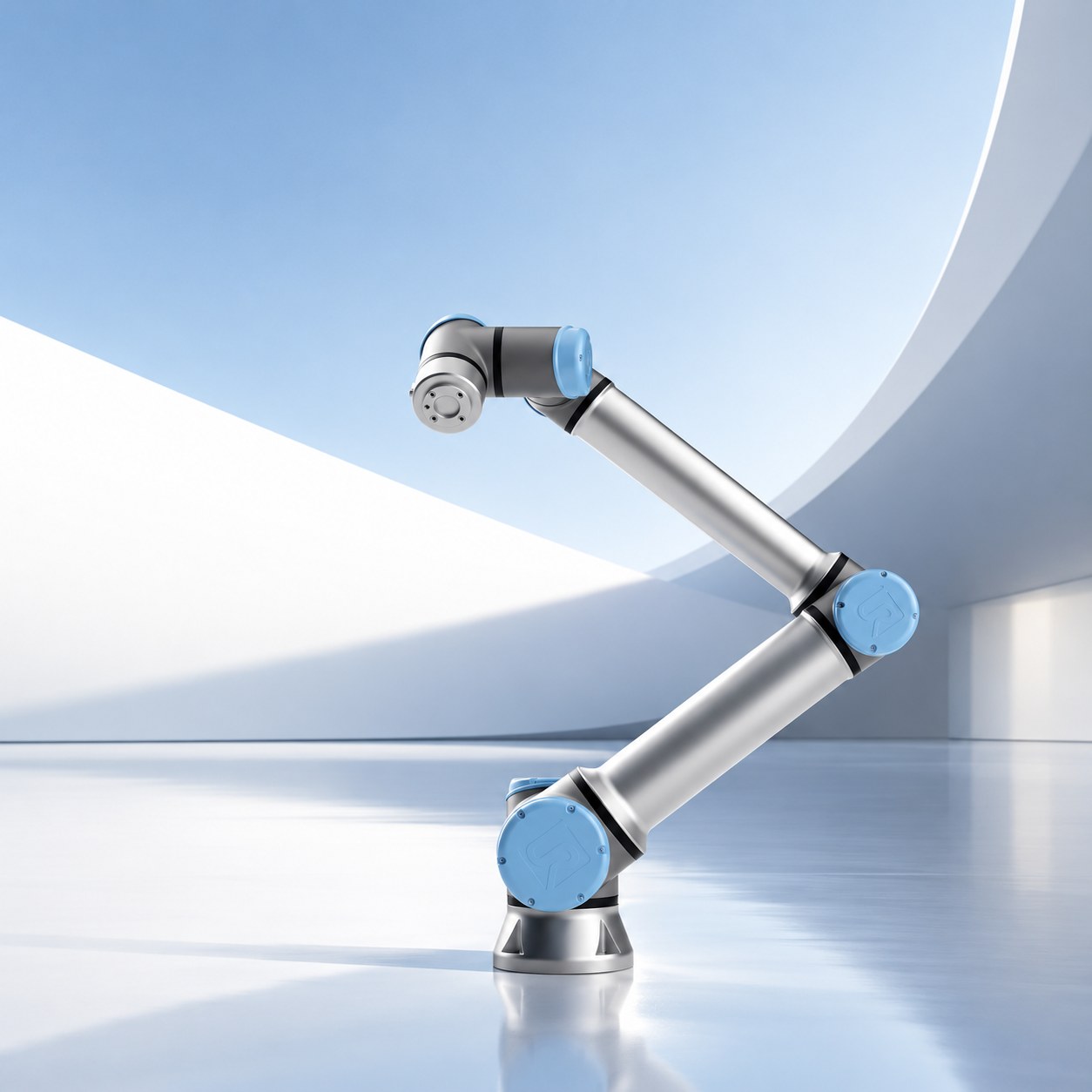
Flexible, collaborative automation
A fit for changing tasks and mixed production. Integration and safeguards are selected after a risk assessment of the complete application.
View detailsChoose the right technology for your application, space and production rhythm.
Flexible, collaborative automation
A fit for changing tasks and mixed production. Integration and safeguards are selected after a risk assessment of the complete application.
View details
Built for continuous production
A fit for repeatable production rhythms across handling, assembly and palletizing tasks.
View detailsAPPLICATIONS
Feed parts or packaging consistently into the next station, with gripping methods validated on real parts.
OUR PROCESS
Assess parts and production rhythm
Fit the system to your floor space
Commission, test and hand over
FACTORY CHALLENGES
Design around real constraints, then match the robot, gripper and safeguards to the existing line.
Repeated picking, lifting and stacking tie operators to the same task throughout a shift.
Automate routine handling so the team can focus on skilled work and decisions.
Quick setup / Recipe changes
Unsuitable force or speed can deform products and mark packaging.
Validate the gripper, contact force and motion path with real products.
Force sensing / Controlled force
Moisture, condensation and washdown routines constrain equipment selection.
Choose equipment for the actual temperature, cleaning method and required ingress rating.
IP67 where appropriate
Operators still need walkways, replenishment access and maintenance clearance.
Fit a compact cell while assessing safeguards for the complete application.
Fence-free only if assessment allows
IP67 describes ingress protection; it does not by itself certify food-grade use. Food-contact materials and fence-free operation must be checked for the selected equipment and complete-cell risk assessment.
FULL PRODUCTION LINE
Select a stage to see the robot task and what should be tested before installation.
Infeed & Sorting
Separate nested trays, feed raw materials and position products for the next station. Match handling to shape, weight and surface.
END-OF-ARM TOOLING
Weight, shape, surface and fragility drive the choice. Test real parts before specifying the final tool.
01 / 03
Cartons and packaging
For surfaces that form a reliable seal. Test wrinkles, porous materials and vacuum leakage.
Check seal and suction
02 / 03
Delicate or irregular products
Distributes contact force to reduce marking. Select food-contact materials and cleaning method for the application.
Check contact materials
03 / 03
Rigid parts with defined grip points
For trays, cases or components with repeatable grip locations. Validate clamping force and contact marks.
Check force and grip marks
Robot payload includes the product, gripper and all end-of-arm tooling.
BUSINESS CASE
Preview simple payback using your inputs, then measure production effectiveness and scrap before and after installation.
Investment ÷ (monthly benefit − monthly running cost)
Starting values are illustrative: 1,200,000 ÷ (90,000 − 10,000) = 15 months. A 12–18 month target requires site data and is not a guaranteed outcome.
Compare availability, performance and quality before and after, reported in percentage points.
Compare scrap rates: (baseline rate − new rate) ÷ baseline rate × 100.
Measure the real production cycle, including stops and changeovers, not arm speed alone.
Start with a review of your parts and plan.
Talk to our engineers